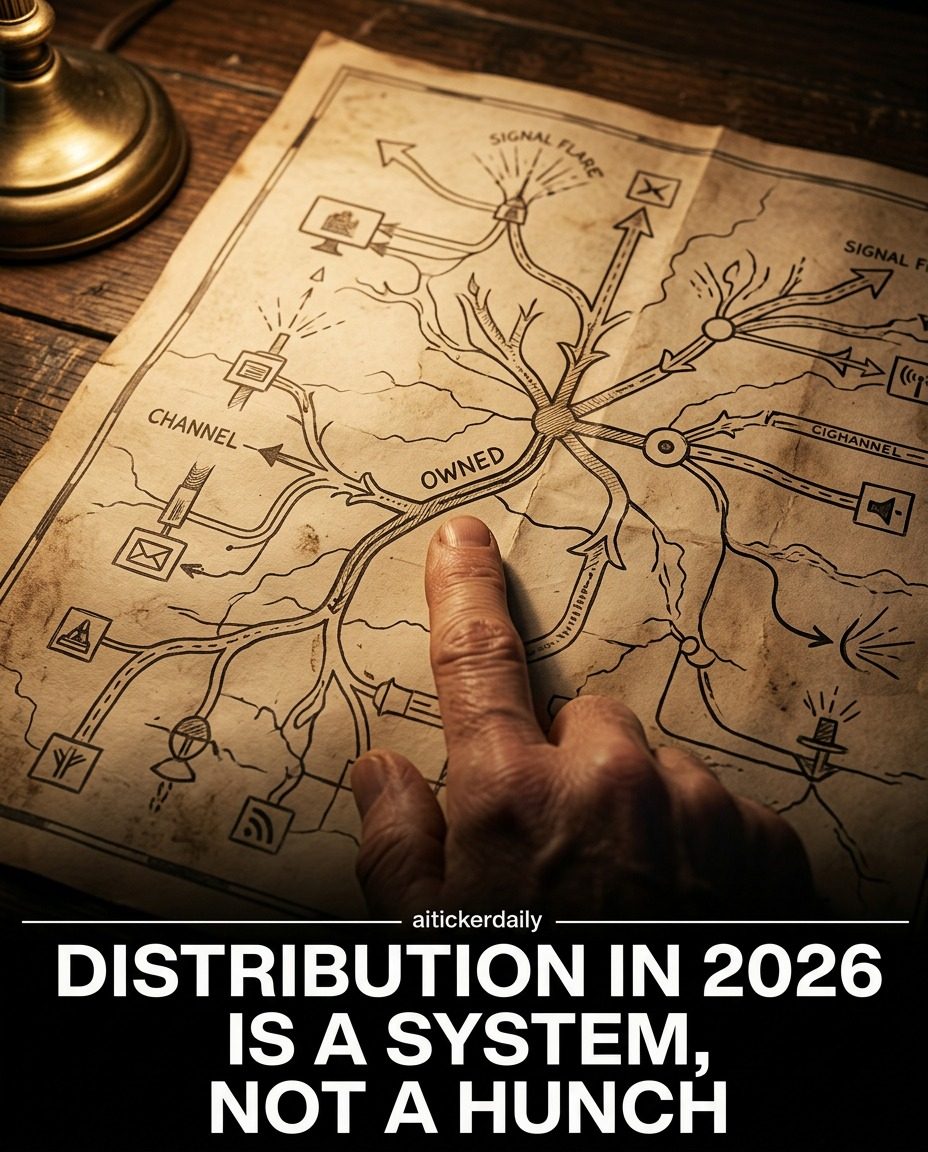
Distribution Strategy in 2026: The Shift from Hunches to Systems
Distribution is evolving rapidly, and by 2026, the landscape will look very different from what we see today. The days of relying on platform tricks and lucky breaks are over. Successful distribution will be about establishing a durable, repeatable path to the customer, built on a solid foundation of systems and mechanics.
Why This Matters
In a world where digital noise is only increasing, having a reliable distribution strategy is more important than ever. The key to winning in 2026 will be owning the customer journey, not just renting space on various platforms. The concept of "owned" versus "rented" channels is crucial in this context. Essentially, the goal is to create repeatable systems that deliver consistent results, rather than relying on unpredictable tricks and algorithms.
Core Concepts of 2026 Distribution
Distributive Systems over Hunches
Traditional methods of distribution often rely on hunches and quick tricks. In 2026, this approach is obsolete. The future will favor distribution as a deliberate system, carefully designed and executed with repeatable mechanics. This shift is significant because it moves distribution from a reactive to a proactive endeavor, where long-term strategies are preferred over short-term gains.
Owned vs. Rented Channels
Owned channels are the backbone of a robust distribution system. These include email, SMS, communities, search properties, and direct traffic. Unlike rented channels, which are subject to the whims of platform algorithms, owned channels provide a stable foundation. They might cost more initially to build, but they are cheaper to maintain in the long run. This is a critical distinction because it allows for greater control and predictability.
Loop Design and Content Infrastructure
Loop design is another essential concept in the 2026 distribution strategy. Unlike traditional funnels that focus on a linear path from awareness to conversion, loops are designed to keep customers engaged over time. Content as infrastructure means treating content as a fundamental part of the distribution system, rather than an afterthought. This approach ensures a continuous flow of valuable content that keeps the audience engaged and loyal.
Deep Dive into Key Components
Content as Infrastructure
Content is no longer just a means to an end; it is the foundation on which the entire distribution system is built. Quality content ensures that customers not only find your brand but also stay engaged over time. By integrating content into the core of your distribution strategy, you create a sustainable ecosystem that supports long-term growth.
Partnerships and Integrations
Partnerships and integrations are vital for scaling and extending the reach of your distribution system. They allow you to leverage external resources and expertise to enhance your distribution capabilities. However, the key is to choose integrations based on workflow fit, not brand fame. Integrations require time to build, maintain, and sell, so it's essential to select them wisely to ensure they align with your overall strategy.
Practical Tips for Implementing a 2026 Distribution System
Build a Strong Foundation with Owned Channels
Start by investing in owned channels. Email, SMS, and community-building are essential. These channels provide a stable base for your distribution efforts, allowing you to control the narrative and maintain consistent communication with your audience. While it might require an initial investment, the long-term benefits are substantial.
Design for Loops, Not Funnels
Design your customer journey as a loop rather than a funnel. Loops keep customers engaged longer and create a more sustainable model for growth. Think about how you can continually bring value to your audience, encouraging repeat interactions and long-term relationships.
Leverage Content as a Core Asset
Treat content as a core asset of your distribution system. High-quality, valuable content should be a central part of your strategy, serving as the foundation for all your distribution efforts. Content that educates, informs, or entertains your audience will keep them coming back for more.
Measure and Optimize
Finally, measure the performance of your distribution system regularly. Track key metrics to identify what's working and what's not. Use this data to optimize your strategy continuously, ensuring that your distribution efforts remain effective and efficient.
Important Takeaways
- Distribution in 2026 will be about systems, not hunches. Success will come from designing repeatable, durable paths to the customer.
- Owned channels are crucial. Invest in email, SMS, communities, and direct traffic to build a stable foundation for your distribution efforts.
- Content is infrastructure. Treat content as a core asset, ensuring it is central to your distribution strategy.
- Measure and optimize. Regularly track and analyze the performance of your distribution system to make informed adjustments.
Conclusion
The future of distribution in 2026 is all about building reliable, repeatable systems that provide a durable path to the customer. By focusing on owned channels, treating content as infrastructure, and leveraging partnerships wisely, you can create a distribution strategy that stands the test of time. Embrace the shift from hunches to systems, and you'll be well on your way to winning in the evolving landscape of 2026.
Watch the Reel
Questions readers ask
What does 'owned channels' mean in the context of 2026 distribution strategy?
Owned channels refer to communication methods that your business has direct control over, such as email lists and SMS contacts. These channels allow you to engage with your audience without relying on third-party platforms, providing a more stable and consistent reach.
Why is it important to focus on systems over platform tricks for distribution?
Focusing on systems ensures a reliable and repeatable process for reaching your audience. Unlike platform tricks, which may change or disappear, systems provide a durable path to customers, helping to build long-term, consistent engagement.
What role will email and SMS play in the 2026 distribution landscape?
Email and SMS are key owned channels that will be crucial for distribution in 2026. They offer direct lines of communication, allowing businesses to own the customer journey and avoid the pitfalls of relying on rented platforms that can change algorithms or policies unexpectedly.
How can businesses transition from platform tricks to effective distribution systems?
To make this transition, businesses should start by identifying key owned channels and building systems around them. This involves establishing repeatable methods for content creation, distribution, and engagement. It's also important to integrate these systems with existing platforms to maximize reach and efficiency.
What are the benefits of owning the customer journey in 2026?
Owning the customer journey provides businesses with greater control and consistency in their distribution efforts. It allows for more personalized and targeted communication, leading to higher engagement and customer loyalty, as well as better data collection for future strategies.
What are some examples of rented platforms in distribution?
Rented platforms include social media networks, third-party websites, and other channels where you don't have direct control over the audience or communication methods. Examples are Facebook, Instagram, and Google Ads, which can change algorithms or policies, affecting your reach and engagement.
How can partnerships and integrations support a 2026 distribution strategy?
Strategic partnerships and integrations can enhance a 2026 distribution strategy by extending the reach of owned channels. For example, integrating email and SMS systems with e-commerce platforms can automate distribution and improve customer engagement, while partnerships with complementary businesses can help reach new audiences.
Related deep dives
Similar reads based on topic and creator.


Recent articles
Fresh deep dives from the latest Reels we unpacked.




Comments
Be the first to comment.