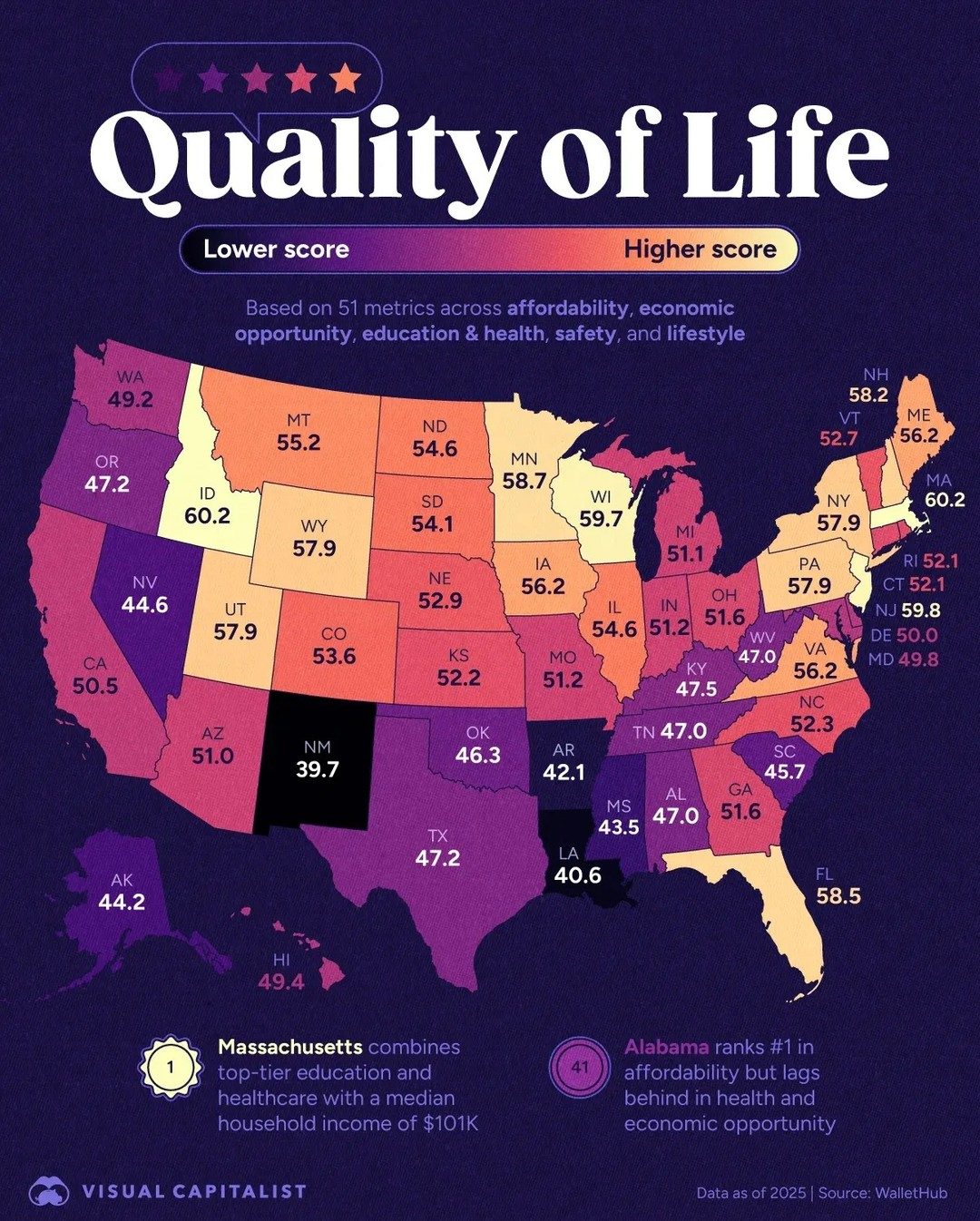
US Quality of Life Map
Based on 51 metrics, Massachusetts emerges as the top state for quality of life in 2025, highlighting a shift in regional dominance and a growing "livability paradox."
Context / Why this matters
Quality of life encompasses a range of factors that influence where people choose to live. These factors include affordability, economic opportunity, education, health, safety, and lifestyle. Understanding how states rank in these areas can help individuals make informed decisions about where to live, work, and raise families. It also provides valuable insights for policymakers aiming to improve their states' livability.
Main discussion
Metrics and Methodology
The ranking is based on 51 key metrics, providing a comprehensive view of what contributes to a high quality of life. These metrics are grouped into several categories:
- Affordability: This includes cost of living, housing affordability, and other economic factors that impact daily expenses.
- Economic Opportunity: Factors such as job growth, unemployment rates, and income levels fall under this category.
- Education: This includes the quality of educational institutions, graduation rates, and student-to-teacher ratios.
- Health: Access to healthcare, health insurance coverage, and public health metrics are crucial components.
- Safety: Crime rates, personal and property safety, and overall security are considered.
- Lifestyle: This encompasses various factors that contribute to overall well-being, such as leisure activities, cultural offerings, and community engagement.
Regional Dominance
While Massachusetts leads the pack, several Midwest states like Idaho and Wisconsin also dominate the top 10. This trend highlights a shift in regional dominance, challenging the traditional perception that coastal regions offer the best quality of life. The Midwest's rise can be attributed to factors like lower cost of living, strong job growth, and a balanced approach to education and healthcare.
The Livability Paradox
Many of the most affordable states rank near the bottom in overall quality of life. This paradox suggests that while affordability is a crucial factor, it is not the sole determinant of a high quality of life. States that prioritize education, health, economic opportunity, and safety tend to fare better in overall rankings.
State-Specific Insights
Massachusetts
- Strengths: Massachusetts excels in education and healthcare, with top-tier institutions and comprehensive healthcare services. The state boasts a median household income of $101,000, indicating strong economic opportunities.
- Weaknesses: The high income levels come with a higher cost of living, which can offset some of the benefits.
Alabama
- Strengths: Alabama ranks #1 in affordability, making it an attractive option for those looking to minimize living expenses.
- Weaknesses: The state lags behind in health and economic opportunity, which can negatively impact overall quality of life.
Practical tips
If you're considering a move based on quality of life, here are some practical tips:
- Assess Your Priorities: Determine which factors are most important to you. For example, if education is a top priority, consider states with strong educational systems like Massachusetts.
- Balance Affordability and Quality: While affordability is crucial, consider how it balances with other factors. A state with a low cost of living might not offer the same economic opportunities or educational benefits as a more expensive state.
- Research Local Amenities: Look beyond the basic metrics and consider the lifestyle offerings, such as cultural events, outdoor activities, and community engagement.
- Explore Multiple States: Don't limit your search to one region. States like Idaho and Wisconsin offer unique benefits that might not be found in more traditional top-ranked states.
- Consider Future Growth: Look at trends in job growth, population growth, and economic development to ensure that the state you choose will continue to offer a high quality of life in the future.
Important takeaways
Understanding the nuances of quality of life across different states can help individuals and families make informed decisions about where to live. Here are the key takeaways:
- Quality of Life is Multifaceted: It encompasses a range of factors, including affordability, economic opportunity, education, health, safety, and lifestyle.
- Regional Trends Matter: The Midwest is emerging as a strong contender for quality of life, challenging the traditional dominance of coastal regions.
- Affordability Alone is Not Enough: States with high affordability may not rank well in other important factors, highlighting the need for a balanced approach.
- Massachusetts and Alabama Offer Contrasting Examples: Massachusetts excels in education and healthcare but has a higher cost of living, while Alabama is affordable but lags in health and economic opportunity.
Conclusion
When choosing a place to live, it's essential to consider all aspects of quality of life, not just affordability. States like Massachusetts, Idaho, and Wisconsin offer unique benefits that cater to different priorities and preferences. By understanding the metrics and regional trends, you can make a more informed decision that aligns with your long-term goals and values.
Watch the Reel
Questions readers ask
Which factors contributed most to Massachusetts' top ranking in the 2025 US Quality of Life Rankings?
Massachusetts' top ranking is attributed to its strong performance in several key areas, including robust job growth, excellent healthcare systems, high levels of community engagement, and a thriving economy. The state's commitment to innovation and a high standard of living also played significant roles in securing its position.
Why are Midwest states performing well in the 2025 US Livability Rankings?
Midwest states are shining in the 2025 rankings due to their affordability, strong job growth, and high levels of community engagement. These states offer a balance of economic opportunities and a lower cost of living, making them attractive for both individuals and families.
What does the 'livability paradox' refer to in the context of these rankings?
The 'livability paradox' refers to the phenomenon where states with high livability scores may not always align with traditional expectations. For instance, states with lower costs of living and strong job growth, like those in the Midwest, are outshining some coastal states typically associated with higher quality of life.
How were the 2025 US Quality of Life rankings determined?
The rankings are based on a comprehensive analysis of 51 metrics that cover various aspects of livability. These metrics include affordability, job growth, community engagement, health and safety, and overall quality of life factors. The analysis provides a detailed view of what contributes to a high-quality living environment in each state.
Which states should I consider if I am looking for the best job growth opportunities?
For the best job growth opportunities, consider states like Massachusetts, as well as several Midwest states that have shown strong economic development. These regions are known for their thriving economies and robust job markets, making them ideal for career advancement and professional growth.
What role does community engagement play in the 2025 rankings?
Community engagement is a critical factor in the 2025 rankings, as it reflects the level of social cohesion and civic participation within a state. States with high levels of community engagement tend to have stronger social support systems, better public services, and a higher overall quality of life.
Related deep dives
Similar reads based on topic and creator.




Recent articles
Fresh deep dives from the latest Reels we unpacked.




Comments
Be the first to comment.