Global Government Debt Trends in 2025
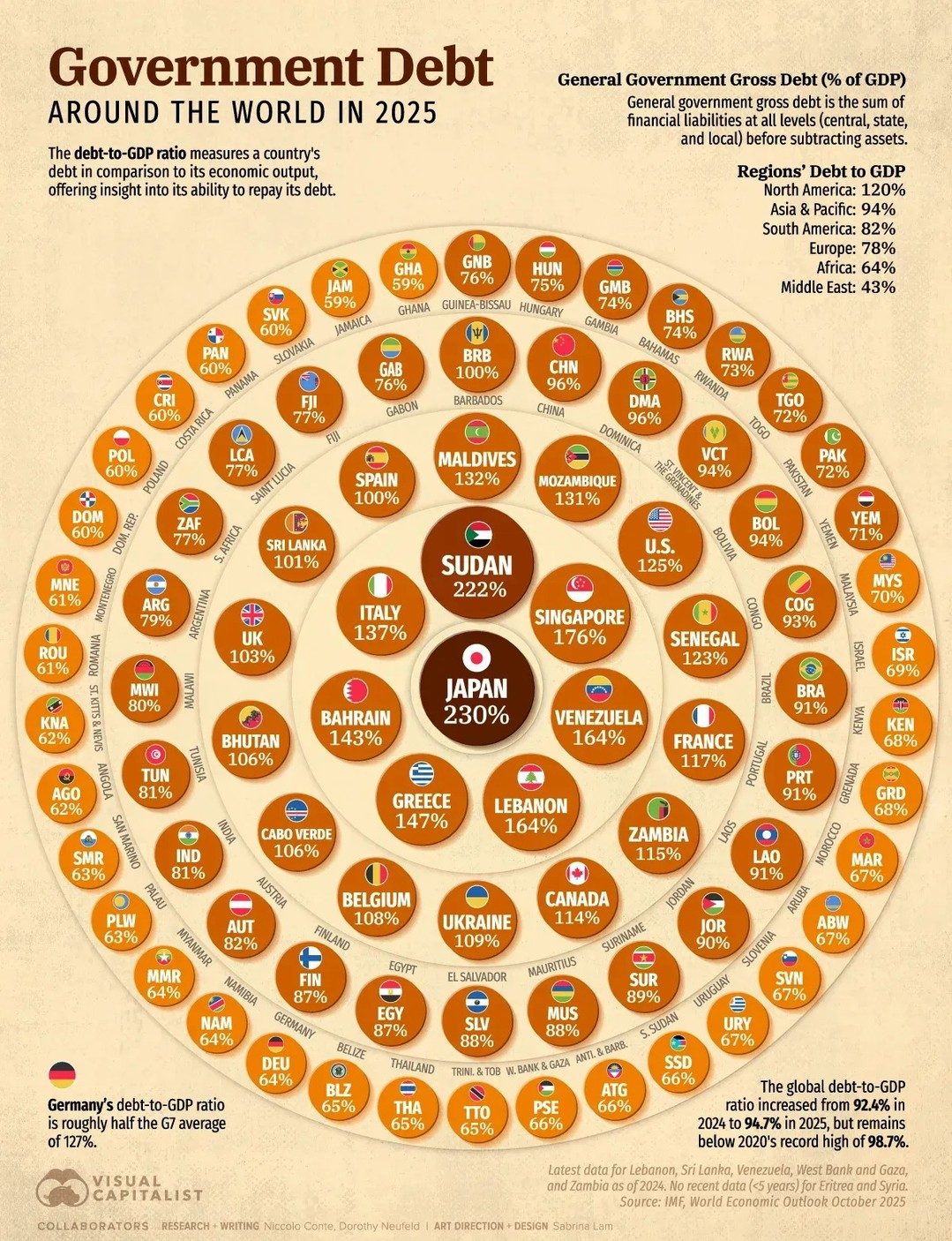
Global government debt has reached a staggering $111 trillion by 2025, equating to 94.7% of the world's total GDP. This significant financial metric highlights the economic landscape and debt management strategies of nations worldwide. Let's delve into the data, focusing on countries with the highest debt-to-GDP ratios and the economic implications of such high debt levels.
Why This Matters
Understanding global debt trends is crucial for assessing the financial health of nations and the potential impacts on global economic stability. High debt levels can influence a country's ability to invest in public services, infrastructure, and social welfare programs. Additionally, debt management strategies can affect a nation's credit rating, borrowing costs, and overall economic growth.
Global Debt Trends
Highest Debt-to-GDP Ratios
Countries with the highest debt-to-GDP ratios in 2025 include Japan, Sudan, and Singapore, leading the list with significant financial obligations. Japan has a debt-to-GDP ratio of 103%, while Sudan and Singapore follow closely with 128% and 125%, respectively. These numbers indicate that these countries are borrowing more than their entire annual economic output, which can pose challenges for sustainability and economic growth.
The United States, a major global economy, ranks 11th with a debt-to-GDP ratio of 125%. This highlights that even developed nations with robust economies are not immune to high debt levels. In total, 23 countries are borrowing more than their entire annual economic output, with two countries owing more than double their GDP. This underscores the widespread nature of high debt levels across the globe.
Regional Comparisons
Analyzing debt-to-GDP ratios by region provides a more nuanced understanding of global debt trends. Here are some key insights:
- North America: The region has a debt-to-GDP ratio of 120%, with the United States being the primary contributor to this figure. The high debt levels in North America reflect the significant economic activities and financial obligations of the U.S. and Canada.
- Asia & Pacific: This region has a debt-to-GDP ratio of 94%, with countries like Japan and Singapore leading the pack. The high debt levels in this region can be attributed to various factors, including infrastructure development, social welfare programs, and economic growth initiatives.
- South America: South America has a debt-to-GDP ratio of 82%, indicating a moderate level of debt compared to other regions. Countries in this region are working to manage their debt levels while promoting economic development.
- Europe: Europe's debt-to-GDP ratio stands at 78%, reflecting the financial challenges faced by many European nations. The region's debt levels are influenced by factors such as economic downturns, fiscal policies, and investments in public services.
- Africa: Africa has the lowest debt-to-GDP ratio at 43%, making it the region with the most manageable debt levels. This relatively low debt ratio can be attributed to various factors, including economic development strategies, international aid, and fiscal policies.
- Middle East: The Middle East has a debt-to-GDP ratio of 64%, indicating a moderate level of debt. The region's debt levels are influenced by factors such as economic diversification, infrastructure development, and financial obligations.
Practical Tips for Managing High Debt Levels
High debt levels can pose significant challenges for countries, but there are strategies to manage and mitigate these risks. Here are some practical tips for managing high debt levels:
Fiscal Discipline
Implementing fiscal discipline is crucial for managing high debt levels. Governments can achieve this by reducing unnecessary expenditures, optimizing public spending, and increasing revenue through taxation. Fiscal discipline can help countries achieve a balanced budget and reduce their reliance on borrowing.
Economic Growth
Promoting economic growth is essential for managing high debt levels. Countries can achieve economic growth by investing in infrastructure, promoting innovation, and creating a favorable business environment. Economic growth can increase revenue, reduce the debt-to-GDP ratio, and improve the overall financial health of a nation.
Debt Restructuring
Debt restructuring can help countries manage their debt levels by negotiating more favorable terms with creditors. This can include extending repayment periods, reducing interest rates, or negotiating debt forgiveness. Debt restructuring can provide countries with the financial breathing room needed to implement effective economic policies and promote sustainable growth.
Public-Private Partnerships
Public-private partnerships (PPPs) can play a crucial role in managing high debt levels. PPPs can help countries finance infrastructure projects, promote economic development, and create jobs without increasing public debt. By leveraging private sector resources and expertise, countries can achieve their development goals while maintaining fiscal responsibility.
Important Takeaways
- Global government debt has reached $111 trillion by 2025, equating to 94.7% of global GDP.
- Countries with the highest debt-to-GDP ratios include Japan, Sudan, and Singapore, with the U.S. ranking 11th.
- High debt levels can pose challenges for countries' financial health and economic growth.
- Managing high debt levels requires fiscal discipline, promoting economic growth, debt restructuring, and leveraging public-private partnerships.
Conclusion
Global government debt trends in 2025 highlight the significant financial obligations of nations worldwide. High debt-to-GDP ratios in countries like Japan, Sudan, and Singapore underscore the challenges faced by many nations. By implementing effective debt management strategies, countries can achieve fiscal sustainability, promote economic growth, and create a more stable global economy. Understanding these trends and their implications is essential for policymakers, economists, and individuals to make informed decisions and contribute to a more prosperous future.
Watch the Reel
Recent articles
Fresh deep dives from the latest Reels we unpacked.




Comments
Be the first to comment.