Sustainability Rankings: Assessing Global Trade Policies
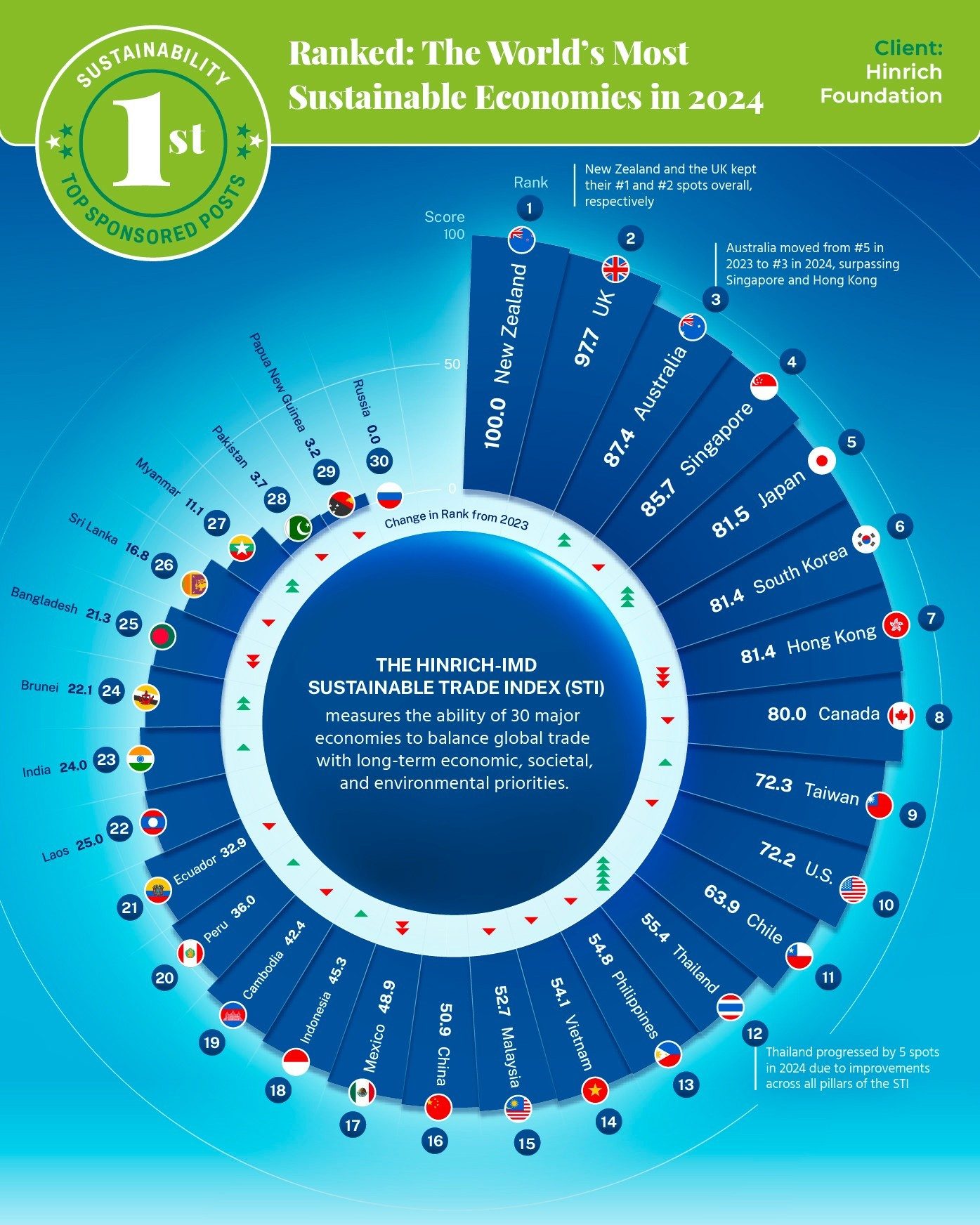
Global trade has long been a cornerstone of economic development, but balancing it with long-term economic, societal, and environmental priorities is a monumental challenge. The Hinrich Foundation, in collaboration with IMD, has developed the Hinrich-IMD Sustainable Trade Index (STI) to measure how well major economies are integrating sustainability into their trade policies.
Context / Why this matters
The STI is a vital tool for understanding how nations are navigating the complex interplay between trade, economic growth, societal well-being, and environmental stewardship. As global trade continues to expand, it is crucial to evaluate how these economic activities are impacting the environment and society. The STI helps policymakers, businesses, and educators make informed decisions about sustainable trade practices.
Main discussion
The Hinrich-IMD Sustainable Trade Index
The STI evaluates 30 major economies based on their ability to balance global trade with long-term priorities. The Index considers a range of factors, including environmental impact, social welfare, and economic sustainability. This holistic approach provides a comprehensive view of how well each nation is performing in integrating sustainability into their trade policies.
Top Performers in 2024
In 2024, New Zealand and the UK maintained their top positions, securing the first and second spots respectively. New Zealand's score of 977 and the UK's score of 874 reflect their strong commitment to sustainable trade practices. Australia also made significant strides, moving up from the fifth position in 2023 to the third in 2024. Australia surpassed Singapore and Hong Kong, which fell to the fourth and seventh positions, respectively, with Singapore scoring 81.5 and Hong Kong 80.0.
Notable Rankings and Movements
While New Zealand and the UK remain at the forefront, other countries have shown notable improvements and declines. For example, South Korea tied with Japan at the fifth spot, both scoring 81.4. Canada, Taiwan, and the United States followed, with scores of 72.3, 72.2, and 63.9, respectively. The rankings highlight the varying levels of commitment to sustainable trade practices across different regions.
Regional Insights
The rankings also provide valuable insights into regional sustainability efforts. For instance, countries like Singapore and Hong Kong, known for their robust trade policies, have room for improvement in their sustainability measures. Meanwhile, Australia's upward trajectory demonstrates that significant progress can be made in a relatively short period.
Lower Rankings and Challenges
At the lower end of the spectrum, countries like Ecuador and Pakistan face significant challenges. Pakistan scored a mere 3.2, indicating a pressing need for policy reforms to enhance sustainability. Similarly, Bangladesh and Myanmar, with scores of 21.3 and 21.1, respectively, highlight the broader challenges faced by countries in balancing economic growth with sustainable practices.
The Broader Implications
The STI not only serves as a benchmark for evaluating national trade practices but also as a catalyst for policy changes and international cooperation. The data-driven insights from the Index can inform policymakers about effective strategies for promoting sustainable trade, while simultaneously encouraging collaboration among nations to address global sustainability challenges.
Practical tips
For policymakers and businesses, the STI offers a roadmap for implementing sustainable trade practices. Countries looking to improve their rankings can learn from the strategies employed by top performers like New Zealand and the UK. Key areas to focus on include:
- Environmental Sustainability: Implement policies that reduce the environmental impact of trade, such as promoting renewable energy and reducing carbon emissions.
- Social Welfare: Ensure that trade practices support societal well-being, including fair labor practices and community development.
- Economic Stability: Balance economic growth with sustainability, fostering long-term economic stability and resilience.
Businesses can also play a crucial role by adopting sustainable practices in their supply chains and operations, thereby contributing to their country's overall sustainability score.
Important takeaways
Balancing global trade with sustainability is a complex task, but the Hinrich-IMD Sustainable Trade Index provides a clear framework for evaluating progress. The STI highlights the need for a holistic approach that considers economic, societal, and environmental factors. By focusing on these areas, nations can work towards a more sustainable future.
Conclusion
The Hinrich-IMD Sustainable Trade Index offers a comprehensive evaluation of how well countries are integrating sustainability into their trade policies. From New Zealand's leadership to Australia's upward trajectory, the rankings provide a snapshot of the global efforts towards sustainable trade. By leveraging the insights from the STI, policymakers, businesses, and educators can work together to foster a more sustainable and equitable global trade landscape.
Watch the Reel
Questions readers ask
What is the Hinrich-IMD Sustainable Trade Index (STI)?
The Hinrich-IMD Sustainable Trade Index is a tool developed by the Hinrich Foundation and IMD to evaluate how well major economies incorporate sustainability into their trade policies. It assesses 30 economies based on environmental, social, and economic sustainability factors.
How does the STI measure sustainability in trade policies?
The STI uses a comprehensive methodology to analyze how countries integrate sustainability into their trade practices. It looks at environmental stewardship, societal well-being, and economic growth, providing a holistic view of a nation's approach to sustainable trade.
What makes New Zealand and the UK stand out in the 2024 rankings?
New Zealand and the UK top the 2024 rankings due to their advanced policies that effectively balance trade with environmental and social sustainability. Their leadership in integrating these factors into trade practices sets a benchmark for other economies.
Why is it important to evaluate the sustainability of global trade policies?
Evaluating the sustainability of global trade policies is crucial for understanding the impact of economic activities on the environment and society. This assessment helps nations make informed decisions to promote long-term economic growth while minimizing negative impacts.
How can other countries improve their sustainability rankings?
Countries can improve their sustainability rankings by adopting policies that prioritize environmental stewardship, societal well-being, and economic growth. This includes implementing sustainable trade practices, reducing carbon footprints, and promoting fair labor conditions.
What role do environmental, social, and economic factors play in the STI?
The STI evaluates these factors to provide a comprehensive view of a country's sustainability in trade. Environmental factors include measures to protect ecosystems, social factors focus on labor conditions and societal impacts, and economic factors assess financial stability and growth.
Related deep dives
Similar reads based on topic and creator.

Recent articles
Fresh deep dives from the latest Reels we unpacked.




Comments
Be the first to comment.