Power Outages in the U.S. | 2024
America's power grid is under increasing strain, with certain states experiencing severe and prolonged outages. This analysis delves into the 2024 statistics of power outages across the U.S., highlighting the states most affected and the factors contributing to these disruptions.
Why This Matters
Understanding the extent and impact of power outages is crucial for several reasons. Extended power outages can disrupt daily life, cause significant economic losses, and even lead to safety concerns. By examining the data, we can identify trends, pinpoint vulnerable areas, and inform efforts to bolster the nation's power infrastructure.
Power Outages by State
The Most Affected States
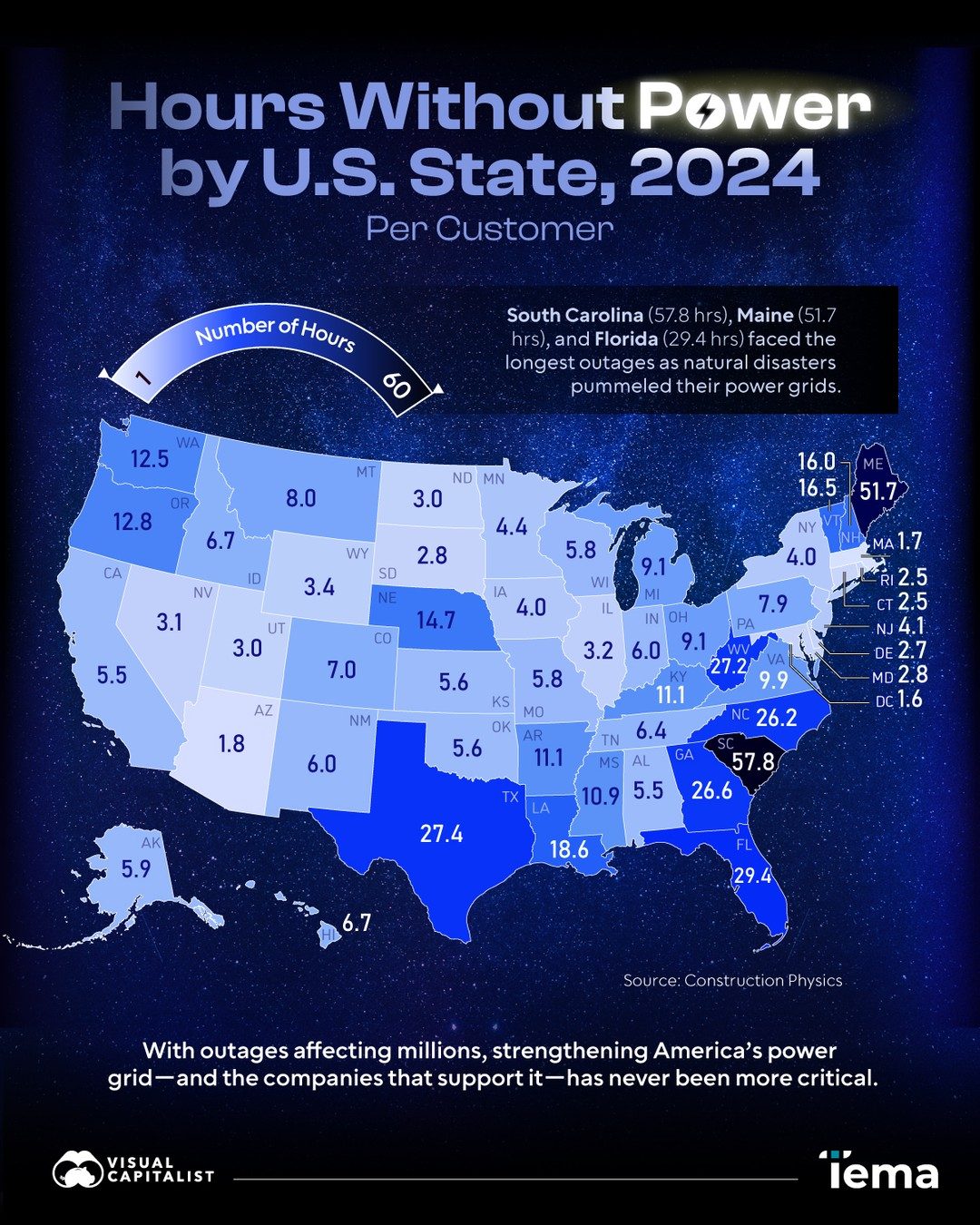
In 2024, certain states stood out for experiencing the longest power outages. South Carolina, Maine, and Florida faced the most significant disruptions, with customers enduring 57.8 hours, 51.7 hours, and 29.4 hours without power, respectively. These states were severely impacted by natural disasters, which pummeled their power grids and led to extended outages.
Regional Disparities
The infographic provides a detailed breakdown of power outages across different regions. For instance, Oregon, Washington, and Montana also experienced prolonged outages, with customers going without power for 16.5 hours, 16.0 hours, and 14.7 hours, respectively. These states, along with others in the Pacific Northwest and Northern Plains, faced significant challenges due to severe weather conditions and other environmental factors.
Eastern and Central States
Moving to the Eastern and Central regions, states like New Hampshire, Vermont, and Rhode Island reported relatively lower outage durations. However, states like Indiana and Illinois still faced notable disruptions, with customers experiencing outages ranging from 5.5 hours to 16.5 hours.
Southern and Western States
In the South, states like Alabama, Georgia, and Louisiana also reported significant outages. Texas, a state known for its energy production, faced several hours of outages, highlighting the vulnerability of even the most energy-rich regions. The Western states, including Nevada, Idaho, and Wyoming, also experienced notable disruptions, albeit to a lesser extent compared to the most affected states.
Factors Contributing to Power Outages
Natural Disasters
Natural disasters, including hurricanes, floods, and wildfires, played a significant role in the prolonged outages experienced in 2024. These events can cause widespread damage to power infrastructure, leading to extended periods without electricity. For instance, hurricanes in Florida and severe storms in South Carolina significantly impacted their power grids.
Aging Infrastructure
The aging power grid infrastructure in many states also contributed to the outages. Years of underinvestment and lack of maintenance have left many power systems vulnerable to disruptions. As the grid ages, the likelihood of outages increases, making it crucial to invest in modernization and maintenance.
Extreme Weather Events
Extreme weather events, such as heatwaves and winter storms, also put significant strain on the power grid. These events can cause a surge in energy demand, leading to blackouts and brownouts as the grid struggles to meet the increased load. As climate change continues to affect weather patterns, these events are likely to become more frequent and severe.
Human Error and Equipment Failure
Human error and equipment failure are also significant factors in power outages. Mistakes during maintenance or repairs, as well as equipment failures, can lead to disruptions in power supply. Ensuring proper training and regular maintenance can help mitigate these risks.
Practical Tips for Power Grid Resilience
Investing in Modernization
Investing in the modernization of the power grid is essential for improving its resilience. This includes upgrading infrastructure, integrating renewable energy sources, and implementing smart grid technologies. Modernizing the grid can help reduce outages and enhance the overall reliability of the power supply.
Enhancing Preparation for Natural Disasters
Preparing for natural disasters is crucial for minimizing their impact on the power grid. This involves developing robust emergency response plans, ensuring the availability of backup power sources, and implementing early warning systems. By being proactive, states can better protect their power infrastructure and reduce the duration of outages.
Strengthening Grid Infrastructure
Strengthening the grid infrastructure involves ensuring that it can withstand the stresses of extreme weather events and other disruptions. This includes fortifying power lines, installing more resilient equipment, and ensuring that the grid can handle increased loads. Strengthening the grid can help prevent outages and reduce their impact when they do occur.
Public Awareness and Preparedness
Public awareness and preparedness are also essential for managing power outages. Educating the public on how to prepare for outages, including having backup power sources and emergency supplies, can help minimize the impact on individuals and communities. Encouraging energy conservation during outages can also help alleviate strain on the grid and speed up recovery.
Collaborative Efforts and Policy
Collaborative efforts between government agencies, private sector companies, and community organizations are crucial for enhancing power grid resilience. Policy changes that prioritize infrastructure investment, renewable energy integration, and emergency preparedness can significantly improve the reliability of the power supply. Engaging with communities and stakeholders can also help identify and address specific needs and challenges.
Important Takeaways
The Need for Resilience
The 2024 power outage statistics highlight the urgent need for a more resilient power grid. As natural disasters and extreme weather events become more frequent, investing in modernizing and strengthening the grid is essential for safeguarding communities and ensuring reliable energy supply.
Regional Variations
The data reveals significant regional variations in power outages, with some states experiencing much longer disruptions than others. Understanding these variations can help inform targeted efforts to improve grid resilience in the most affected areas.
The Role of Natural Disasters
Natural disasters played a significant role in the extended outages, underscoring the need for robust emergency preparedness and response plans. Enhancing the grid's ability to withstand such events is crucial for minimizing disruption and ensuring a swift recovery.
Conclusion
America's aging power grid is under significant strain, and the 2024 outage statistics serve as a stark reminder of the challenges ahead. By understanding the factors contributing to these disruptions and taking proactive measures to enhance grid resilience, we can work towards a more reliable and resilient power infrastructure. Investing in modernization, preparing for natural disasters, and strengthening the grid are essential steps towards a future where power outages are minimized, and communities are better protected.
Watch the Reel
Questions readers ask
Which states experienced the most prolonged power outages in 2024?
In 2024, South Carolina, Maine, and Florida were the states with the longest power outages. These states faced significant disruptions due to natural disasters, making them stand out in the 2024 power outage statistics.
What factors contributed to the power outages in 2024?
Natural disasters were a key factor in the power outages of 2024. These events put immense strain on the power infrastructure, leading to prolonged outages and highlighting the need for infrastructure improvements.
How do power outages impact the economy?
Power outages can cause significant economic losses. Businesses may face downtime, leading to reduced productivity and revenue. Additionally, individuals may experience financial strain due to spoiled food, damaged electronics, and other related costs.
What can be done to prevent or mitigate power outages?
To prevent or mitigate power outages, power companies can focus on enhancing grid stability through regular maintenance, upgrading infrastructure, and implementing advanced monitoring systems. Additionally, laying out back-up power solutions and being prepared for natural disasters can help.
How did power companies respond to the outages in 2024?
The response of power companies to the outages in 2024 varied. Some companies effectively managed the outages with timely repairs and communication with customers. However, others faced criticism for slow response times and inadequate preparation for natural disasters.
Which states had the highest number of hours without power in 2024?
While the article highlights South Carolina, Maine, and Florida for experiencing the longest power outages, the exact number of hours without power can vary. These states faced prolonged disruptions, indicating a higher number of hours without power compared to other states.
Recent articles
Fresh deep dives from the latest Reels we unpacked.




Comments
Be the first to comment.