Corporate Bankruptcies in 2023
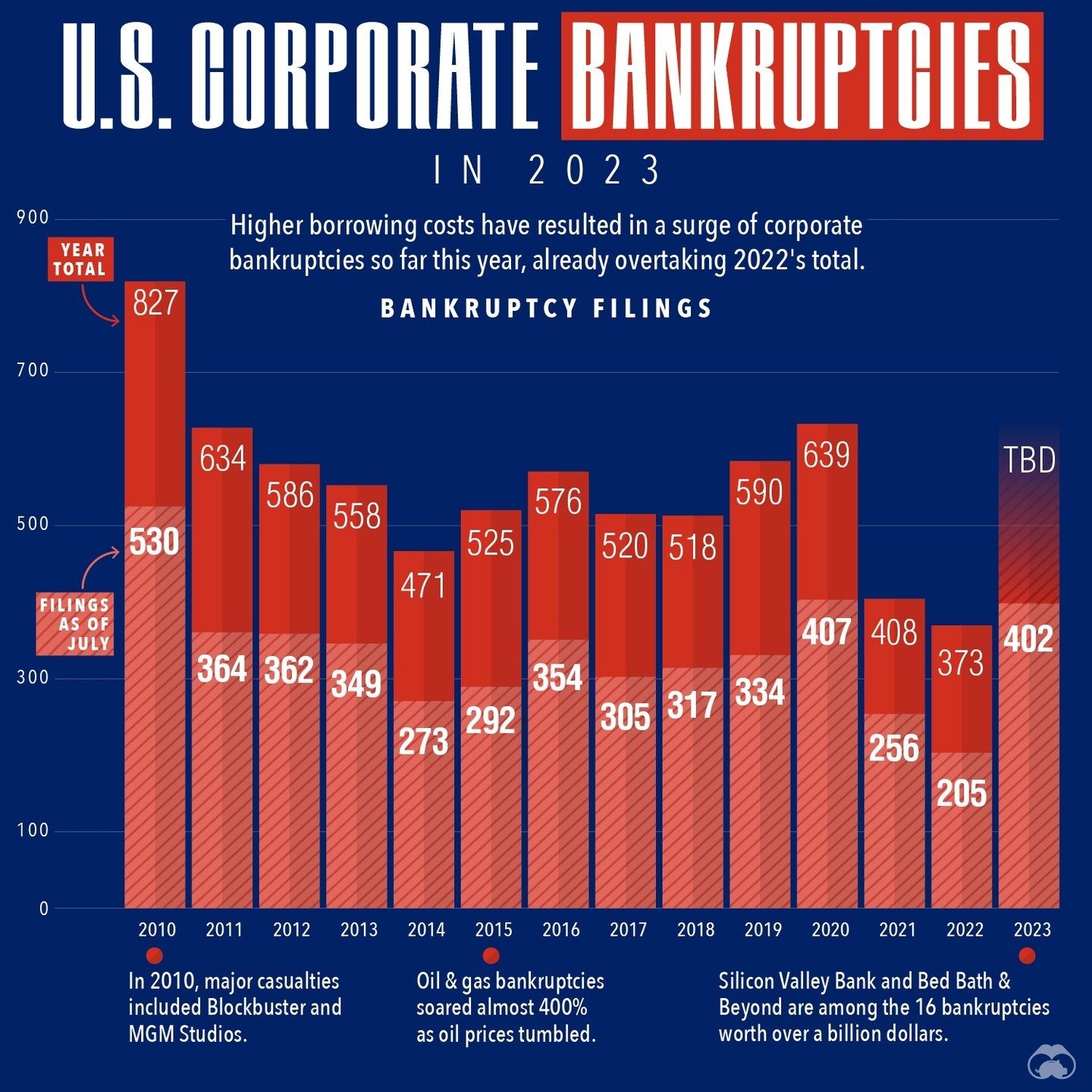
Corporate bankruptcies in 2023 have already surpassed the total number from the previous year. As of July, the year has seen 827 bankruptcy filings, significantly higher than the 518 recorded in 2022. This surge can be attributed to several factors, with higher borrowing costs being a major driver.
Why This Matters
The rise in corporate bankruptcies is a critical indicator of the broader economic environment. It signals that many businesses are struggling to stay afloat due to increased debt and financial strain. The sectors most affected by this trend are Consumer Discretionary, Healthcare, and Industrials, which are typically characterized by higher debt ratios. Understanding these trends can help stakeholders anticipate market shifts, assess risk, and make informed decisions.
Main Discussion
The Impact of Higher Borrowing Costs
Higher borrowing costs have forced many companies to reassess their financial strategies. With interest rates rising, the cost of maintaining debt has increased, making it difficult for some businesses to meet their financial obligations.
In 2023, this financial pressure has led to a notable surge in bankruptcies, particularly in sectors that rely heavily on debt financing. The Consumer Discretionary and Industrial sectors, which have higher debt ratios, have seen a significant increase in filings. For instance, the Consumer Discretionary sector alone accounts for 48 of the total bankruptcies this year.
Notable Corporate Bankruptcies
Several high-profile companies have filed for bankruptcy this year, including Silicon Valley Bank and Bed Bath & Beyond. These two companies are among the 16 bankruptcies worth over a billion dollars. The collapse of Silicon Valley Bank in March was a particularly notable event, as it marked the second-largest bank failure in U.S. history. This event underscored the broader economic instability and raised concerns about the potential for further failures in the financial sector.
Sector-Specific Trends
Consumer Discretionary and Industrials
The Consumer Discretionary and Industrial sectors have been hit particularly hard. These sectors typically have higher debt ratios, making them more susceptible to financial strain. The Consumer Discretionary sector has seen 48 bankruptcies this year, while the Industrial sector has seen 45. This trend highlights the need for these industries to focus on debt management and financial stability.
Healthcare and Energy
The Healthcare sector has also experienced a significant number of bankruptcies, with 39 filings so far this year. This sector is particularly susceptible to financial stress, given its reliance on insurance reimbursements and regulatory changes. The Energy sector, which has been affected by fluctuating oil prices, has seen 14 bankruptcies. Oil and gas bankruptcies soared almost 400% as oil prices tumbled, underscoring the sector’s volatility.
Financials and Technology
The Financials sector has seen 26 bankruptcies, highlighting the broader economic instability and the impact of higher borrowing costs. The Information Technology sector has seen 11 bankruptcies, indicating that even tech companies are not immune to financial stress.
Practical Tips
For investors, understanding these trends can help in making more informed decisions. Here are some practical tips:
Diversify Your Portfolio
Investors should consider diversifying their portfolios to mitigate risk. By spreading investments across multiple sectors, investors can reduce the impact of sector-specific downturns.
Monitor Sector Performance
Keep a close eye on sectors with higher debt ratios, such as Consumer Discretionary and Industrials. These sectors are more likely to experience financial stress and may require more careful monitoring.
Assess Bankruptcy Risks
Before investing in a company, evaluate its financial health and bankruptcy risks. Look for companies with strong balance sheets, low debt ratios, and stable cash flows.
Important Takeaways
The surge in corporate bankruptcies in 2023 is a clear indicator of the current economic environment. Higher borrowing costs, sector-specific vulnerabilities, and high-profile bankruptcies have all contributed to this trend. Investors and stakeholders should take note of these developments and adjust their strategies accordingly. By understanding the underlying factors and sector-specific trends, they can make more informed decisions and better navigate the current economic landscape.
Conclusion
Corporate bankruptcies in 2023 have reached a critical level, with higher borrowing costs and financial stress playing significant roles. While sectors like Consumer Discretionary and Industrials are facing the most significant challenges, the broader economic instability has affected various industries. By understanding these trends and taking proactive measures, investors and stakeholders can better navigate the current economic landscape and make informed decisions.
Watch the Reel
Questions readers ask
What are the primary factors driving the surge in corporate bankruptcies in 2023?
The primary factor driving the surge in corporate bankruptcies in 2023 is the increase in borrowing costs, which has made it challenging for businesses to manage their debt. Additionally, certain sectors like Consumer Discretionary, Healthcare, and Industrials are struggling more than others, contributing to the overall trend.
How do 2023 corporate bankruptcy filings compare to previous years?
As of July 2023, there have been 827 corporate bankruptcy filings, which is significantly higher than the 518 filings recorded throughout the entire year of 2022. This indicates a substantial increase in corporate financial strain compared to recent years.
Which industries are most affected by the rise in corporate bankruptcies in 2023?
The sectors most affected by the rise in corporate bankruptcies in 2023 are Consumer Discretionary, Healthcare, and Industrials. These industries are characterized by higher debt ratios, making them more vulnerable to financial strain and increased borrowing costs.
Why is the surge in corporate bankruptcies a significant indicator of the broader economic environment?
The surge in corporate bankruptcies signals that many businesses are struggling to stay afloat due to increased debt and financial strain. This trend can help stakeholders anticipate market shifts, assess risk, and understand the broader economic environment.
What can stakeholders do to navigate the current trend of corporate bankruptcies in 2023?
Stakeholders can navigate the current trend by closely monitoring the sectors most affected by corporate bankruptcies, such as Consumer Discretionary, Healthcare, and Industrials. Staying informed about market shifts and the financial health of these industries will help them make informed decisions about investments and risk management.
How have higher borrowing costs impacted corporate bankruptcies in 2023?
Higher borrowing costs have made it more difficult for businesses to manage their debt, leading to a sharp increase in corporate bankruptcies. This trend is evident in the significant rise in filings compared to 2022, highlighting the financial strain many companies are under.
What is the global perspective on corporate insolvencies in 2023?
While the article focuses on the United States, similar trends are likely being observed globally. Higher borrowing costs and struggling sectors are universal challenges, so other countries may also be experiencing an increase in corporate insolvencies. However, specific data for global corporate insolvencies in 2023 would require additional research.
Recent articles
Fresh deep dives from the latest Reels we unpacked.




Comments
Be the first to comment.