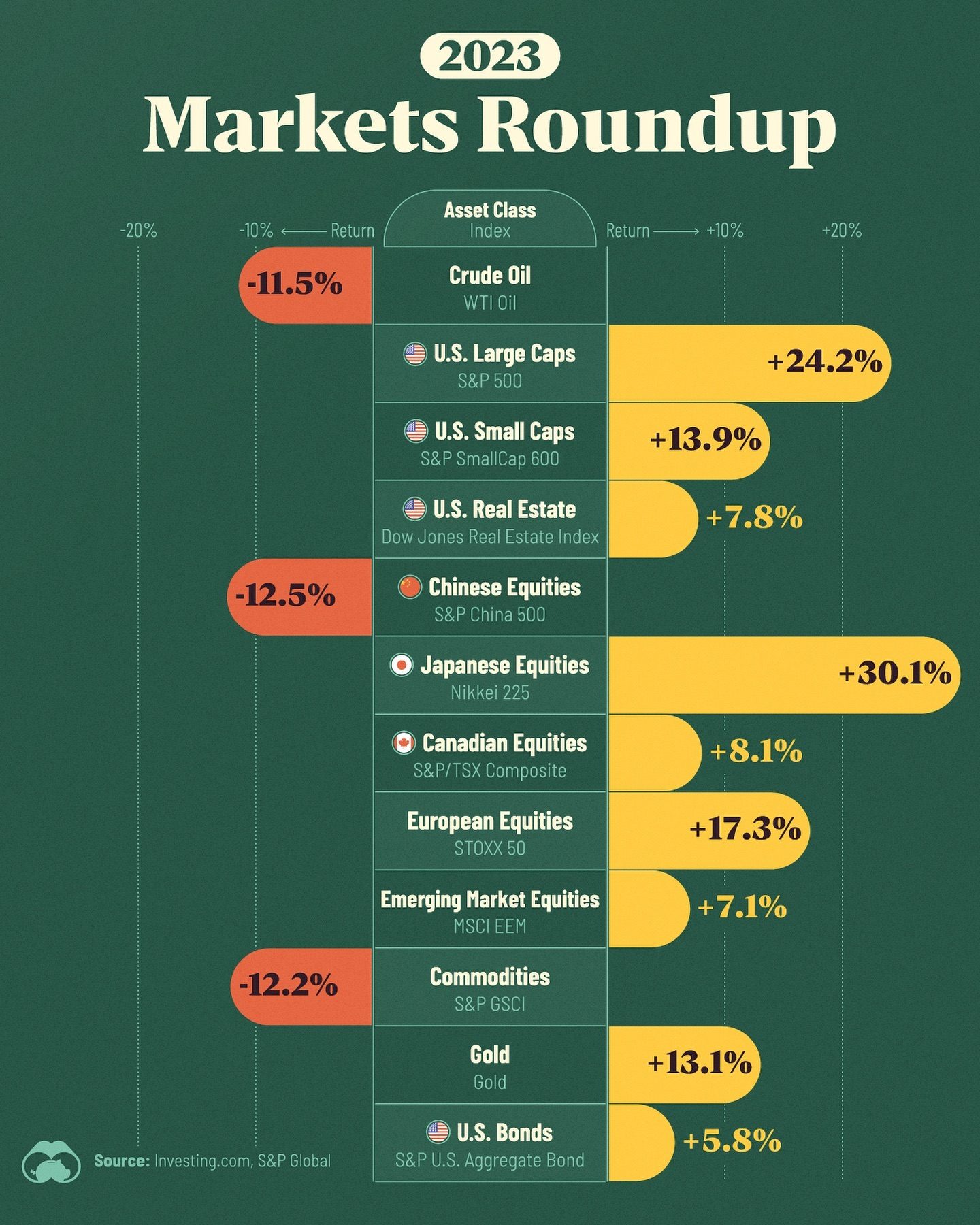
Asset classes in 2023 saw a wide range of performance, with notable variations across different sectors. The Nikkei 225, representing Japanese equities, emerged as a strong performer, posting gains of 30.1%. Given this context, let's explore the performance of various asset classes and analyze the broader financial landscape of 2023.
Context: Why This Matters
Understanding the performance of different asset classes in 2023 provides valuable insights for investors, traders, and financial analysts. These insights help in making informed decisions about asset allocation, risk management, and investment strategies. The 2023 market roundup illustrates the volatility and opportunities present in various asset classes, offering a snapshot of the global financial landscape.
Performance Across Major Asset Classes
Equities
Japanese Equities
Japanese equities, represented by the Nikkei 225, saw a remarkable 30.1% return in 2023. This significant growth can be attributed to several factors, including robust corporate earnings, favorable economic policies, and a surge in investor confidence. The Japanese economy showed signs of recovery, with key industries such as manufacturing and technology driving growth.
U.S. Equities
In the United States, both large-cap and small-cap equities performed well. The S&P 500, a key benchmark for large-cap stocks, returned 24.2%. This strong performance reflects the resilience of the U.S. economy, which benefited from a combination of steady economic growth, low interest rates, and strong corporate earnings. Small-cap stocks, represented by the U.S. Small Caps index, also performed well, with a return of 13.9%. This indicates that investors were optimistic about the future of smaller, domestic-focused companies.
European and Emerging Market Equities
European equities, as measured by the STOXX 50, returned 17.3% in 2023. The European market saw improvements in economic conditions, with several countries experiencing robust growth and favorable economic policies. Emerging market equities, tracked by the MSCI EEM, had a 7.1% return. While emerging markets faced challenges such as geopolitical risks and currency volatility, they still managed to deliver modest gains.
Chinese and Canadian Equities
Chinese equities, represented by the S&P/China 500, returned 30.1%, making it one of the top performers in 2023. This significant growth highlights the ongoing economic expansion in China, driven by its strong industrial and consumer sectors. Canadian equities, as measured by the S&P/TSX Composite, returned 8.1%, reflecting a stable domestic market influenced by strong commodity prices.
Commodities
Commodities, as a whole, had a mixed performance in 2023. Crude oil, specifically the WTI (West Texas Intermediate) benchmark, saw a 11.5% decrease. This decline can be attributed to factors such as fluctuating global demand and supply dynamics, influenced by geopolitical tensions and energy policies.
On the other hand, gold saw a 5.8% increase, indicating its status as a safe-haven asset during periods of economic uncertainty. The S&P GSCI, a broad-based commodity index, returned 13.1%, showing a positive trend in the overall commodity market.
Real Estate
U.S. real estate, tracked by the Dow Jones Real Estate Index, returned 7.8% in 2023. This modest yet steady growth indicates a stable real estate market, driven by ongoing demand for residential and commercial properties. Factors such as low interest rates and a resilient economy contributed to this performance.
Bonds
U.S. bonds, represented by the S&P U.S. Aggregate Bond Index, saw a return of -12.2%. This negative performance reflects the challenges faced by the bond market in 2023, including rising interest rates and inflationary pressures. Bonds, traditionally seen as a safe-haven asset, faced headwinds due to the changing economic environment.
Practical Tips for Navigating the 2023 Market
Diversification
Diversifying your portfolio across various asset classes can help mitigate risks and optimize returns. Consider allocating investments across equities, bonds, real estate, and commodities to balance your portfolio and reduce exposure to any single market downturn.
Monitor Economic Indicators
Economic indicators such as GDP growth, inflation rates, and unemployment figures provide valuable insights into the overall health of the economy. Monitoring these indicators can help you anticipate market trends and make informed investment decisions.
Stay Informed
Staying informed about global economic trends and geopolitical events can help you navigate market volatility. Regularly review financial news, economic reports, and market analyses to stay updated on the latest developments.
Consult with Financial Advisors
Consulting with financial advisors can provide personalized guidance tailored to your investment goals and risk tolerance. Professional advice can help you develop a well-rounded investment strategy and make informed decisions.
Consider Long-Term Goals
When investing, it's essential to consider your long-term financial goals. Whether you are saving for retirement, planning for college, or building wealth, a long-term perspective can help you stay disciplined and avoid impulsive decisions based on short-term market fluctuations.
Regular Portfolio Review
Regularly reviewing your portfolio can help you identify and address any imbalances. Assess your asset allocation, performance, and risk exposure periodically, and make necessary adjustments to align with your investment objectives.
Important Takeaways
The 2023 market roundup highlights the diverse performance of different asset classes, offering valuable insights for investors. Key takeaways include:
- Equities as a Leading Asset Class: Equities, particularly in the U.S. and Japan, demonstrated strong performance, driven by favorable economic conditions and robust corporate earnings.
- Commodities and Safe-Haven Assets: Commodities such as gold and the S&P GSCI showed positive returns, indicating their value as safe-haven assets during uncertain times.
- Real Estate Stability: U.S. real estate performed steadily, influenced by low interest rates and a resilient economy.
- Bond Market Challenges: U.S. bonds faced headwinds due to rising interest rates and inflation, resulting in a negative return.
Understanding these trends can help investors make informed decisions and optimize their portfolios for future growth and stability.
Conclusion
Investing in 2023 was a year of mixed results, with equities leading the way while bonds and commodities faced varying challenges. For investors, this highlights the importance of diversification, staying informed, and maintaining a long-term perspective. By understanding the nuances of each asset class and monitoring economic indicators, investors can navigate the market landscape more effectively.
Watch the Reel
Questions readers ask
Which asset class had the best performance in 2023?
Japanese equities, as represented by the Nikkei 225, had the best performance in 2023 with a gain of 30.1%. This makes them the top performers among the asset classes analyzed.
How did U.S. equities perform compared to other regions in 2023?
U.S. equities showed notable strength in 2023, although the specific returns are not mentioned, they performed better than European and emerging market equities, which posted varied and positive returns.
What were the overall trends in 2023 for emerging market equities?
Emerging market equities posted positive returns in 2023, but the performance varied significantly. This variability highlights the diversity and potential risks within these markets.
How did European equities fare in 2023?
European equities had a positive performance in 2023, although the returns were varied. This indicates a mixed performance across different sectors and countries within Europe.
What was the performance of crude oil in 2023?
The article did not provide specific details on crude oil performance in 2023. For insights into crude oil, it would be best to look for other sources that focus on commodity performance.
Why is it important to analyze the 2023 performance of various asset classes?
Analyzing the 2023 performance of different asset classes is crucial for investors, traders, and financial analysts. It helps in making informed decisions about asset allocation, risk management, and developing effective investment strategies.
Recent articles
Fresh deep dives from the latest Reels we unpacked.




Comments
Be the first to comment.