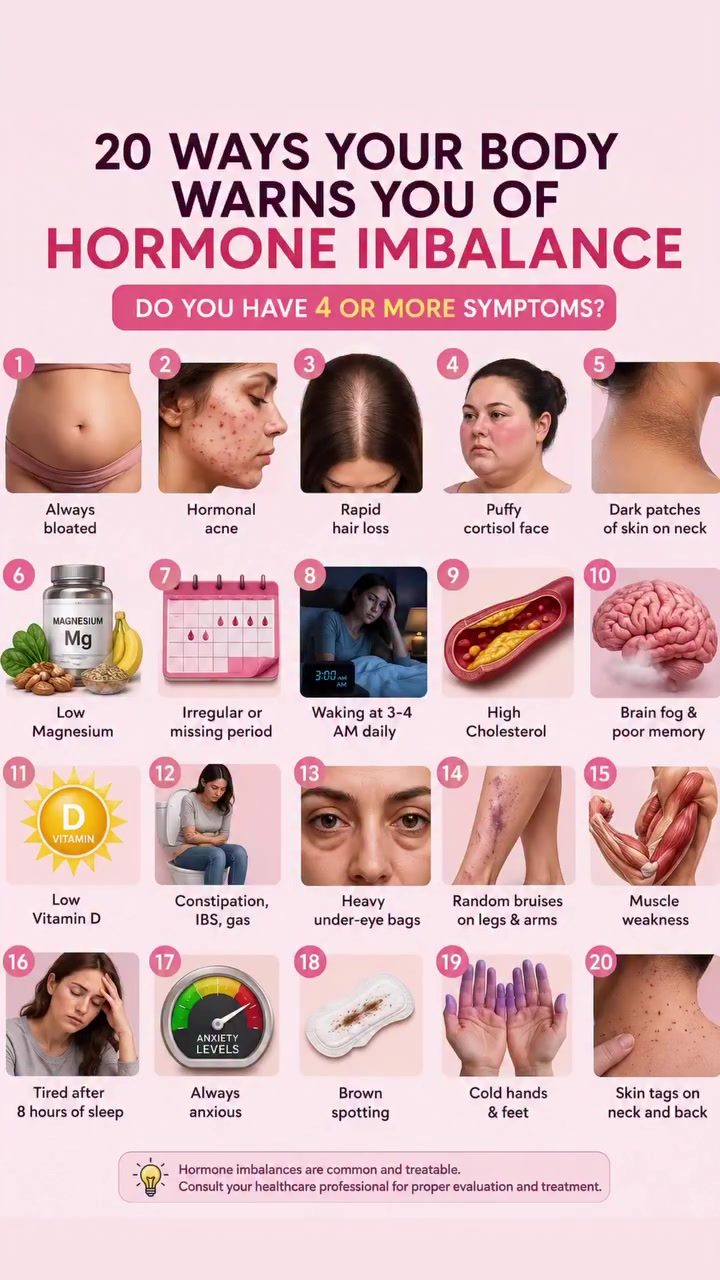
Hormone Imbalance Symptoms: 20 Ways Your Body May Be Warning You
Hormone imbalances can significantly impact your overall well-being, affecting everything from metabolism and mood to sleep, skin, and reproductive health. When hormones are out of balance, the body often sends out various warning signs. Recognizing these symptoms is crucial for early intervention and treatment. Let’s delve into the 20 potential symptoms that could indicate a hormone imbalance.
Context / Why this matters
Hormones play a pivotal role in regulating numerous bodily functions. An imbalance can manifest in many ways, often mimicking symptoms of other conditions. This makes it essential to be aware of the signs and seek professional help if multiple symptoms are present.
Main discussion
Common Symptoms of Hormone Imbalance
- Persistent Bloating — Feeling bloated or puffy can be a sign of hormonal fluctuations, particularly related to estrogen and progesterone imbalances.
- Hormonal Acne — Breakouts that occur during specific times of the month, such as before menstruation, can indicate hormonal acne.
- Excessive Hair Loss — Rapid hair loss, especially in patterns, can be a symptom of hormonal imbalances, such as thyroid issues or polycystic ovary syndrome (PCOS).
- Puffy or Rounded Face — Often associated with high cortisol levels, a puffy or rounded face can indicate stress-related hormone imbalances.
- Darkened Skin on the Neck — Also known as acanthosis nigricans, this condition can be linked to insulin resistance and hormonal imbalances.
- Low Magnesium Levels — Magnesium deficiency can cause a variety of symptoms, including muscle cramps, fatigue, and mood changes, which can be related to hormonal issues.
- Irregular or Missed Periods — This is a common sign of hormonal imbalance, often indicating issues with estrogen and progesterone levels.
- Waking Up During the Night — Frequent awakenings, especially around 3-4 AM, can be a sign of cortisol imbalances or other hormonal issues affecting sleep.
- High Cholesterol — Elevated cholesterol levels can be influenced by hormonal imbalances, particularly those related to thyroid function and insulin resistance.
- Brain Fog or Poor Memory — Cognitive issues can be linked to hormonal imbalances, particularly those affecting thyroid hormones and cortisol levels.
- Low Vitamin D Levels — Vitamin D deficiency is common and can exacerbate symptoms of other hormonal imbalances, leading to fatigue, muscle weakness, and mood changes.
- Constipation or Digestive Issues — Hormonal imbalances, especially those involving thyroid hormones, can lead to constipation, irritable bowel syndrome (IBS), and other digestive problems.
Symptoms That May Indicate Specific Hormonal Issues
- Heavy Under-Eye Bags — These can be a sign of fluid retention or dehydration, which can be exacerbated by hormonal imbalances.
- Easy Bruising — This can indicate low estrogen levels or other hormonal imbalances affecting blood vessels and skin health.
- Muscle Weakness — Hormonal imbalances, particularly those involving thyroid hormones and testosterone, can cause muscle weakness and fatigue.
- Feeling Tired Despite Enough Sleep — Persistent fatigue, even after adequate rest, can be a sign of adrenal fatigue or other hormonal issues.
- Persistent Anxiety — High levels of cortisol and other stress hormones can lead to chronic anxiety and mood changes.
- Abnormal Spotting — Frequent or irregular spotting between periods can indicate hormonal imbalances, especially those related to estrogen and progesterone levels.
- Cold Hands and Feet — Poor circulation, often related to hormonal imbalances, can cause cold extremities.
- Skin Tags on Neck and Back — These can be a sign of insulin resistance and hormonal imbalances, particularly in individuals with PCOS or other metabolic disorders.
Practical tips
If you experience four or more of these symptoms, it is advisable to consult a healthcare professional. They can conduct blood tests and other evaluations to identify the underlying cause and develop a tailored treatment plan. Here are some general tips to maintain hormonal balance:
- Eat a Balanced Diet — Consume a diet rich in whole foods, including fruits, vegetables, lean proteins, and healthy fats. Avoid processed foods, excessive sugar, and refined carbohydrates.
- Get 7–9 Hours of Quality Sleep — Prioritize good sleep hygiene to ensure adequate rest and allow your body to regulate hormones naturally.
- Exercise Regularly — Engage in regular physical activity, such as walking, swimming, or yoga, to help manage stress and promote overall health.
- Manage Stress — Practice stress-reduction techniques, such as meditation, deep breathing, or journaling, to keep stress hormones in check.
- Supplement Wisely — Consider supplementing with vitamins and minerals, such as magnesium and vitamin D, under the guidance of a healthcare provider.
Important takeaways
Hormonal imbalances can manifest in various ways, and recognizing the symptoms is the first step toward seeking proper treatment. While having a few symptoms may not necessarily indicate a hormone imbalance, experiencing several of them warrants a visit to a healthcare professional. Early intervention and lifestyle changes can significantly improve overall health and well-being.
Conclusion
Hormones play a critical role in maintaining bodily functions, and their imbalance can lead to a myriad of symptoms. Being aware of these signs and taking proactive steps to address them can help mitigate the impact on your health. If you suspect a hormonal imbalance, do not hesitate to consult a healthcare provider for a thorough evaluation and appropriate treatment.
Watch the Reel
Questions readers ask
What are some common signs of hormone imbalance in women?
Common signs of hormone imbalance in women include irregular periods, persistent acne, and mood swings. Other indicators may encompass bloating, fatigue, and changes in skin and hair texture. If you experience several of these symptoms, it is important to consult a healthcare provider.
Can vitamin deficiencies contribute to hormone imbalances?
Yes, certain vitamin deficiencies can impact hormone balance. For example, low levels of vitamin D can affect hormone regulation, while deficiencies in B vitamins can influence hormones related to mood and energy. Maintaining a balanced diet rich in essential vitamins is key to supporting hormone health.
How can I check for hormone imbalances at home?
While professional medical tests are the most accurate way to diagnose hormone imbalances, there are some home methods that may provide initial insights. Track your menstrual cycle to monitor irregularities, pay attention to changes in mood and skin, and consider using over-the-counter hormone testing kits. However, for a definitive diagnosis, consult a healthcare professional.
What role does magnesium play in hormone balance?
Magnesium is crucial for hormone balance as it helps regulate various hormones, such as cortisol and insulin. Adequate magnesium levels can support hormone production, reduce stress, and improve sleep quality. Incorporating magnesium-rich foods or supplements into your diet may help maintain hormonal equilibrium.
Can hormone imbalances cause neck pain?
Hormone imbalances, particularly those involving the thyroid, can lead to neck pain. Thyroid issues, such as hypothyroidism or hyperthyroidism, can cause swelling in the neck and discomfort. If you experience persistent neck pain along with other symptoms like fatigue, weight changes, or mood swings, it is advisable to seek medical advice.
What are the best healthcare options for managing hormone imbalances?
The best healthcare options for managing hormone imbalances often involve a combination of lifestyle changes and medical treatments. This may include hormone replacement therapy, prescription medications, and dietary adjustments. Consulting an endocrinologist, a specialist in hormone-related disorders, can provide personalized and effective treatment plans.
Why is it important to address hormone imbalance symptoms promptly?
Addressing hormone imbalance symptoms promptly can prevent long-term health issues. Untreated hormone imbalances can lead to more severe conditions, such as infertility, osteoporosis, and an increased risk of cardiovascular disease. Early intervention can help manage symptoms effectively and improve overall quality of life.
Recent articles
Fresh deep dives from the latest Reels we unpacked.




Comments
Be the first to comment.