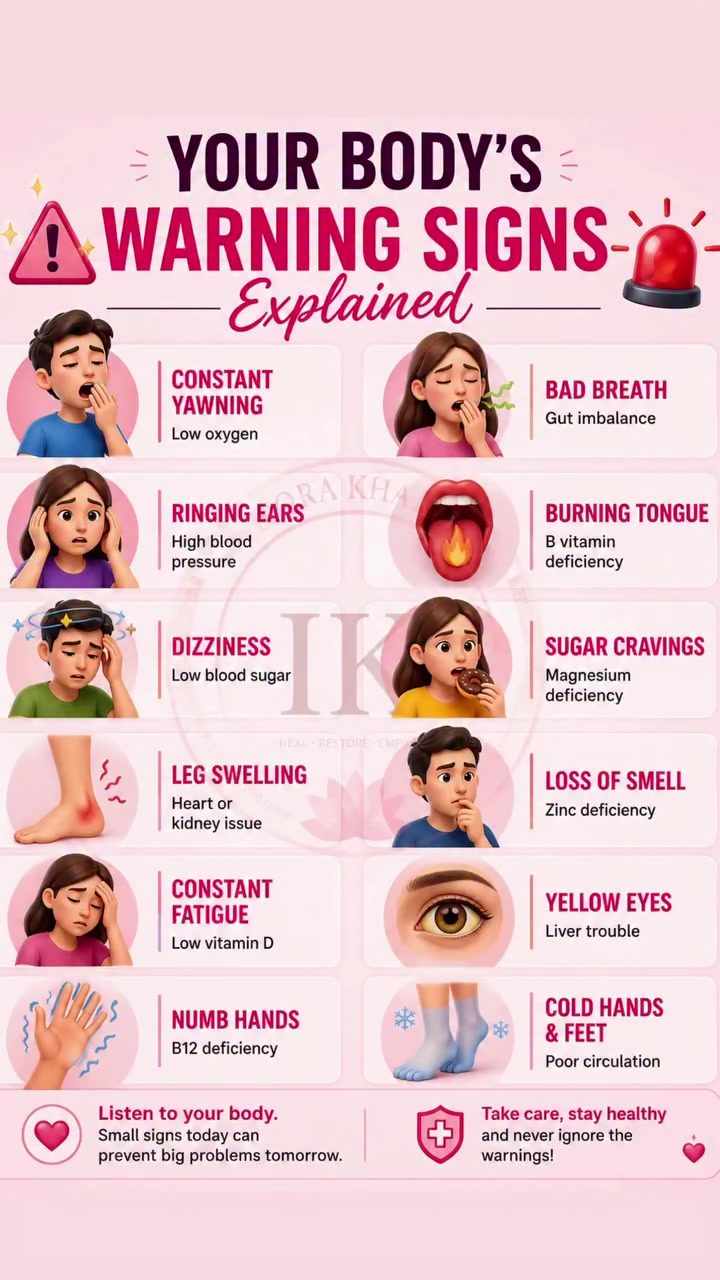
Body Warning Signs
Body warning signs can provide valuable insights into underlying health issues. These signs often go unnoticed or are ignored, but paying attention to them can help prevent more serious health problems. Here are some common body warning signs and their potential causes.
Why This Matters
Understanding body warning signs is crucial for maintaining overall health. Identifying and addressing these signs early can prevent more serious conditions from developing. By recognizing these symptoms, you can take proactive steps to improve your health and well-being. Ignoring these signs can lead to more severe health issues, so it's important to stay vigilant and listen to your body.
Main Discussion
Constant Yawning
Constant yawning can be more than just a sign of tiredness. It might indicate low oxygen levels in the body, which can be linked to various health issues. Conditions such as anemia, respiratory problems, or even sleep disorders can cause chronic yawning. If you find yourself yawning excessively, it might be worth consulting a healthcare provider to ensure there are no underlying health concerns.
Ringing Ears
Ringing in the ears, also known as tinnitus, can be a sign of high blood pressure. High blood pressure is a silent killer and often goes unnoticed until it causes more serious complications. If you experience persistent ringing in the ears, it's important to monitor your blood pressure and consult a healthcare provider for further evaluation.
Dizziness
Dizziness can be caused by a variety of factors, including low blood sugar or heart issues. It can also be a sign of dehydration, inner ear problems, or even neurological conditions. If you experience frequent dizziness, it's important to identify the underlying cause and seek appropriate treatment.
Leg Swelling
Leg swelling can be a sign of heart or kidney issues. Fluid retention in the legs can indicate conditions such as heart failure, kidney disease, or even deep vein thrombosis. If you notice swelling in your legs, especially if it's accompanied by pain or discomfort, it's important to consult a healthcare provider for a thorough evaluation.
Fatigue
Constant fatigue can be a sign of low vitamin D levels. Vitamin D is essential for bone health, immune function, and overall well-being. Low vitamin D levels can lead to fatigue, muscle weakness, and even depression. If you experience persistent fatigue, it might be worthwhile to get your vitamin D levels checked and consider supplementing if necessary.
Bad Breath
Bad breath, or halitosis, can be a sign of a gut imbalance. The bacteria in your gut play a crucial role in digestion and overall health. An imbalance in gut bacteria can lead to various health issues, including bad breath. Maintaining a healthy diet and considering probiotic supplements can help restore gut balance and improve overall health.
Numb Hands
Numbness in the hands can be a sign of B12 deficiency. Vitamin B12 is essential for nerve function and the production of red blood cells. A deficiency in B12 can lead to neurological symptoms, including numbness and tingling in the hands and feet. If you experience numbness in your hands, it's important to consult a healthcare provider and consider getting your B12 levels checked.
Burning Tongue
A burning sensation in the tongue can be a sign of B vitamin deficiency. B vitamins, including thiamine, riboflavin, and niacin, are essential for energy production and overall health. A deficiency in these vitamins can lead to various symptoms, including a burning sensation in the tongue. Maintaining a balanced diet and considering B vitamin supplements can help alleviate this symptom.
Sugar Cravings
Persistent sugar cravings can be a sign of magnesium deficiency. Magnesium is essential for hundreds of biochemical reactions in the body, including energy production and muscle function. A deficiency in magnesium can lead to various symptoms, including sugar cravings, muscle cramps, and fatigue. Ensuring adequate magnesium intake through diet or supplements can help alleviate these symptoms.
Loss of Smell
A sudden loss of smell can be a sign of zinc deficiency. Zinc is essential for immune function, wound healing, and overall health. A deficiency in zinc can lead to various symptoms, including a loss of smell. Maintaining adequate zinc intake through diet or supplements can help restore smell function and improve overall health.
Yellow Eyes
Yellowing of the eyes, or jaundice, can be a sign of liver trouble. The liver plays a crucial role in detoxification and the production of various enzymes. Liver issues can lead to a buildup of bilirubin, a yellow pigment, in the body, causing the skin and eyes to turn yellow. If you notice yellowing of the eyes, it's important to consult a healthcare provider for a thorough evaluation.
Cold Hands and Feet
Cold hands and feet can be a sign of poor circulation. Poor circulation can be caused by various factors, including peripheral artery disease, Raynaud's disease, or even anxiety. Maintaining a healthy lifestyle, including regular exercise and a balanced diet, can help improve circulation and alleviate this symptom.
Practical Tips
It's crucial to pay attention to these warning signs and take proactive steps to address them. Here are some practical tips to help you stay healthy:
- Get Regular Check-ups: Regular medical check-ups can help identify underlying health issues before they become serious.
- Maintain a Balanced Diet: Eating a balanced diet rich in fruits, vegetables, and lean proteins can help provide the necessary nutrients for optimal health.
- Stay Hydrated: Drinking plenty of water can help maintain overall health and prevent various health issues.
- Exercise Regularly: Regular physical activity can help improve circulation, maintain a healthy weight, and reduce the risk of various health conditions.
- Get Enough Sleep: Adequate sleep is essential for overall health and well-being. Aim for 7-9 hours of sleep per night.
- Listen to Your Body: Pay attention to the signs your body is giving you and address any concerns promptly.
Important Takeaways
Listening to your body and addressing warning signs promptly can help prevent more serious health issues. Understanding the potential causes of these signs can help you take proactive steps to improve your health and well-being. Ignoring these signs can lead to more serious health problems, so it's important to stay vigilant and seek medical attention when necessary.
Conclusion
Body warning signs can provide valuable insights into underlying health issues. By paying attention to these signs and taking proactive steps to address them, you can improve your overall health and well-being. Whether it's constant yawning, ringing ears, or dizziness, understanding the potential causes of these symptoms can help you take steps to address them promptly.
Watch the Reel
Questions readers ask
What does it mean if I experience constant yawning throughout the day, even when I'm well-rested?
Constant yawning can be a sign of several underlying issues, such as sleep apnea, fatigue, or even a sign of vitamin deficiency. If you're yawning more than usual, it might be worth checking your iron levels or talking to a healthcare provider about your sleep habits.
What are the potential causes of ringing in the ears?
Ringing in the ears, also known as tinnitus, can be caused by numerous factors, including excessive earwax, age-related hearing loss, or even high blood pressure. In some cases, it could be a sign of an ear infection or a side effect of certain medications, so it's important to consult a healthcare professional.
What might dizziness indicate about my health, and when should I be concerned?
Dizziness can indicate a variety of health issues, such as low blood sugar, inner ear problems, or even a sign of heart disease. Dizziness accompanied with pain, vision changes, or chest pain can be a sign of a more serious condition. Call a healthcare provider if the dizziness is persistent or severe.
What are some possible causes of leg swelling, and should I worry about it?
Leg swelling can be caused by a number of factors, such as prolonged standing or sitting, varicose veins, or even a sign of a more serious health condition, like a blood clot or heart failure. If the swelling is sudden, painful, or accompanied by other symptoms, seek medical attention immediately.
How does bad breath relate to my overall health, and what could it indicate?
Bad breath can be a sign of poor oral health, such as cavities or gum disease, but it can also indicate gastrointestinal issues, like acid reflux. Chronic bad breath, also known as halitosis, can also be a sign of other health conditions, such as diabetes or liver disease, so it's important to consult a healthcare provider if it persists.
What are some common signs of vitamin deficiency, and how can I address them?
Vitamin deficiency can manifest in various ways, such as fatigue, weakness, pale skin, or hair loss. If you suspect a vitamin deficiency, consider incorporating a balanced diet rich in fruits, vegetables, and lean proteins. You might also want to consult a healthcare provider, who can order a blood test to determine which vitamins you may be lacking.
Why do I experience a burning sensation in my body, and when should I seek help for this symptom?
A burning sensation in the body can be caused by various factors, such as nerve issues, poor circulation, or even a side effect of certain medications. It can also indicate an autoimmune disorder, such as lupus or multiple sclerosis. If the burning sensation is accompanied by other symptoms, such as numbness, weakness, or fever, seek medical attention promptly.
Recent articles
Fresh deep dives from the latest Reels we unpacked.




Comments
Be the first to comment.